

What is Neuro-Affirmative Therapy? (And Why it Matters for ADHD & Autism)
If you’ve ever sat in a therapy session feeling like you had to "perform" or "mask" your natural way of being just to be understood, you aren’t alone. For many ADHD, Autistic, and AuDHD individuals, traditional therapy can sometimes feel like another environment where they are expected to fit into a neurotypical box.
Neuro-affirmative therapy is a fundamental shift in that dynamic. Rather than viewing neurodivergence as a set of symptoms to be "fixed" or managed, this approach views your brain wiring as a natural human variation. In my practice, it means we start from a place of validation: your sensory needs, your communication style, and your cognitive processing are all respected.
In this post, we will explore:
The difference between "compliance-based" and "affirmative" support.
How creative interventions help process trauma without the pressure of masking.
Why a neuro-affirmative lens is vital for children and young people in the education system.
As a school counsellor and an integrative therapist, I have seen first-hand how transformative it is when we stop trying to change the person and start changing the environment and the approach.
Frequently Asked Questions (FAQs)
What is the difference between neuro-affirmative therapy and traditional counselling? Traditional counselling often focuses on "behavioural change" or teaching neurodivergent people to "cope" with a neurotypical world. Neuro-affirmative therapy, however, views ADHD, Autism, and AuDHD as natural brain differences. Instead of trying to "fix" your wiring, we work on understanding your sensory needs, reducing the burnout caused by masking, and building a life that accommodates your unique strengths.
How do creative interventions help ADHD and Autistic clients? Standard "talk therapy" relies heavily on constant eye contact and verbal processing, which can be exhausting for neurodivergent brains. Creative interventions—such as using metaphors, visual aids, or
sensory-based tools—provide an alternative way to express complex feelings. This approach reduces the cognitive load, making it easier to process trauma or daily stressors without feeling overwhelmed by the format of the session itself.
Can you support my child if they are struggling in school? Yes. Having worked as a school counsellor, I understand the specific pressures of the UK education system. I support children and young people (CYP) by providing a neuro-affirmative space where they feel seen and heard. I can also help parents understand their child’s sensory profile and suggest ways to advocate for better support within the school environment.
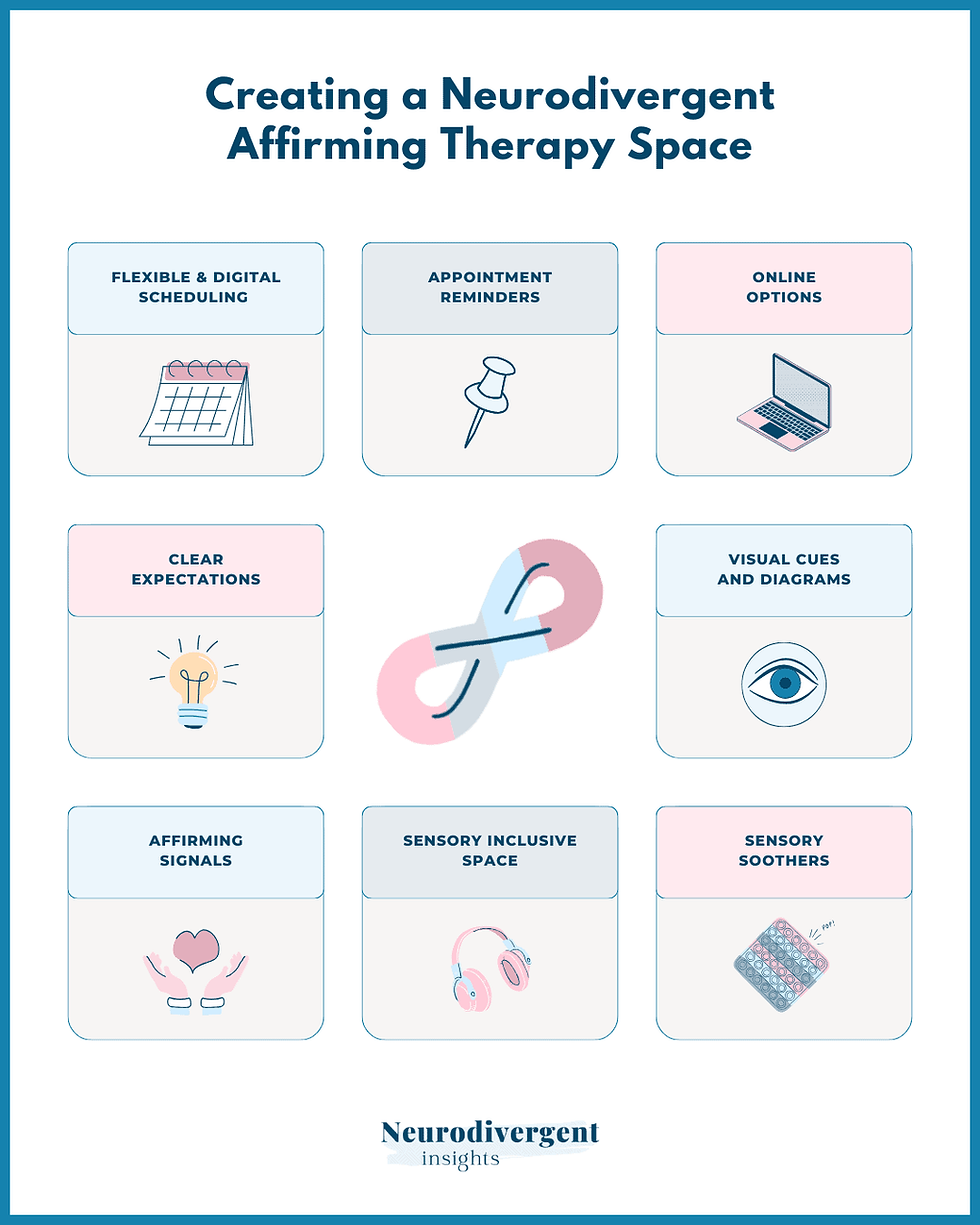
What does a "sensory-friendly" therapy session look like? A sensory-friendly session is one where you have control over the environment. This might mean dimmed lighting, the use of fidget tools, or the freedom to move around or sit on the floor rather than in a formal chair. In my practice, there is no pressure to maintain eye contact or "sit still"; the goal is for your nervous system to feel safe enough to do the work of healing.
Do I need a formal diagnosis of ADHD or Autism to work with you? Absolutely not. Whether you have a formal diagnosis, are self-identified, or are currently navigating the NHS assessment process, my neuro-affirmative approach remains the same. I work with the person in front of me and their lived experience, not just a label or a clinical report.


Comments